Ultimate Guide to Frying Food
Frying is one of the most versatile cooking methods used in restaurants and event venues today. From crisp appetizers to globally inspired entrées, frying allows kitchens to create bold flavors, appealing textures and consistent results across a wide range of menus. The key isn’t following a single “right” way to fry — you need to understand the options available and choose what works best for your operation.
This guide breaks down different types of frying methods, common oil choices and how kitchens can customize their frying approach based on menu needs, volume and customer expectations. Whether you’re refining an existing process or exploring new menu ideas, having the right ingredients, oils and equipment makes all the difference.
Understanding Commercial Frying Methods for Your Operation
There are several frying methods used in commercial kitchens and each offers its own advantages depending on what you’re preparing and how your operation runs. Rather than committing to a single technique, successful restaurants and event venues often use multiple methods to support menu flexibility and maintain quality across different service styles. These include:
- Deep-frying: This method fully submerges food in hot oil, creating an evenly crisp exterior. Deep-frying is often chosen for high-volume kitchens because it consistently delivers results and works well for items such as chicken, fries, seafood and breaded vegetables.
- Shallow frying: This method uses less oil and allows food to cook while partially submerged in the oil, resulting in slightly lower fat uptake when properly executed. It’s commonly used for items that benefit from close attention during cooking, such as cutlets or fritters.
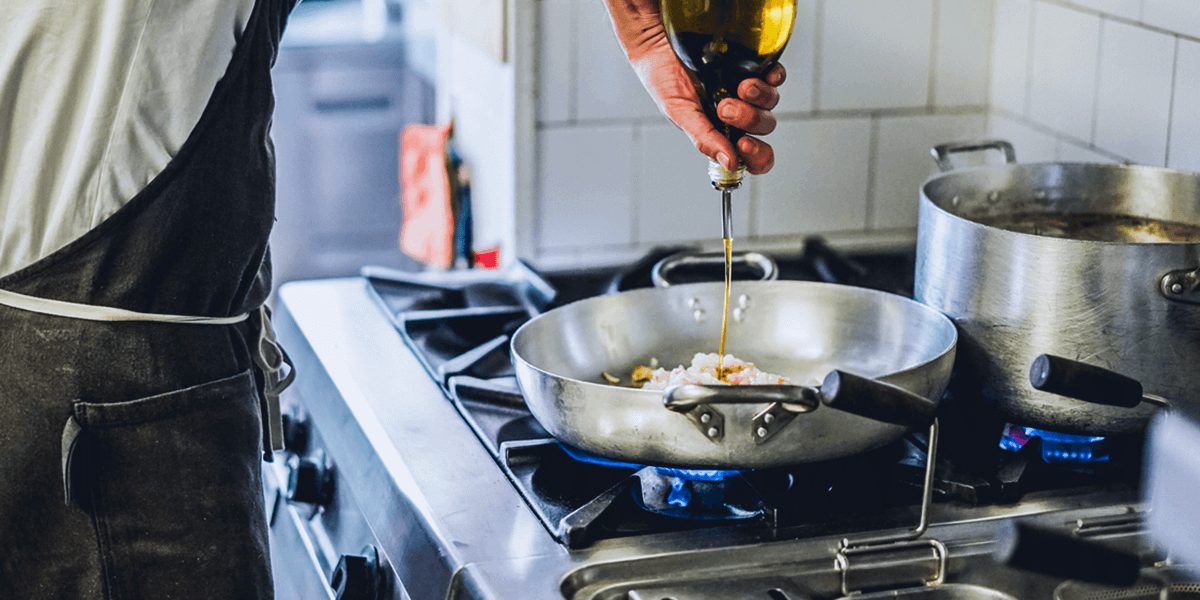
- Saluteing or pan frying: This method involves a smaller amount of oil and quick cooking over direct heat. It’s often used for lighter menu items or when flavor development from the pan is part of the dish.
In many kitchens, the choice between deep-frying and shallow-frying often comes down to volume, speed and the final texture you want to achieve. Rather than focusing on a single best deep-frying method, many operators use a mix of techniques to support a flexible, well-rounded menu.
Selecting Frying Oils That Support Your Menu Goals
Restaurant frying oil selection impacts both operational performance and the final taste of your dishes. The best oil to fry food depends on what you’re frying, how often you’ll change it and what flavor profile your menu requires. Restaurants and event venues benefit from understanding what oil is used for frying under commercial conditions, particularly regarding smoke point, fry life and flavor characteristics.
Vegetable Oil
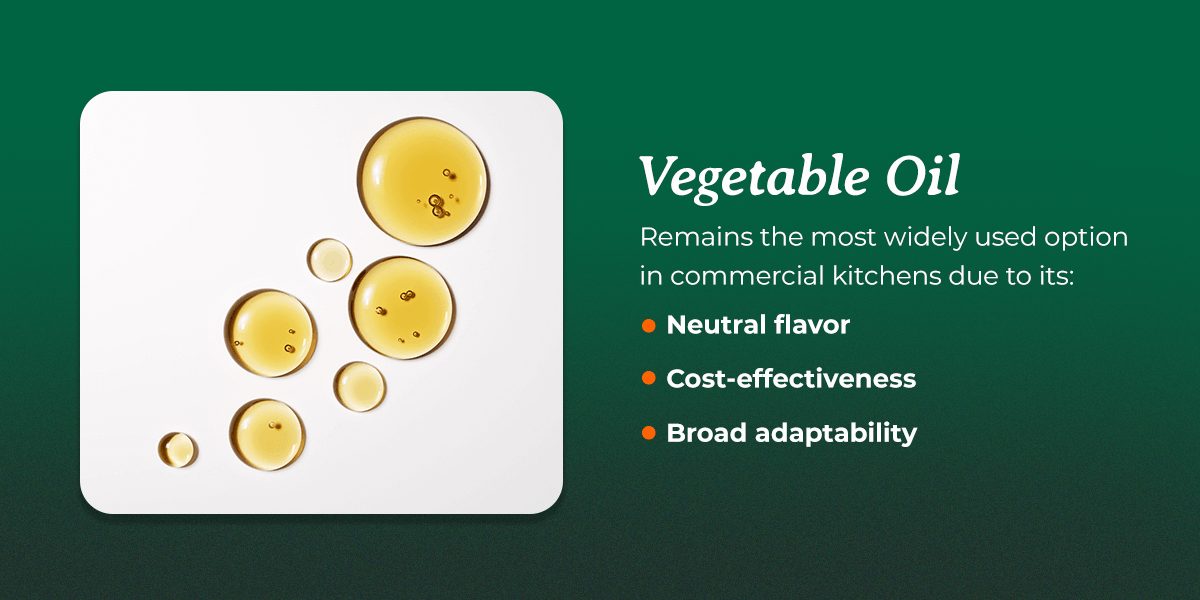
Vegetable oil remains the most widely used option in commercial kitchens due to its neutral flavor, cost-effectiveness and broad adaptability. Its accessibility makes it practical for operations serving diverse menus where consistency across multiple items matters more than distinctive oil flavor.
Frying food in vegetable oil works well for proteins, vegetables and appetizers without overpowering other ingredients. It handles high-volume frying stations reliably and fits within tight food cost parameters, making it especially valuable for event venues managing per-plate budgets or restaurants with price-sensitive menus.
The neutral profile allows seasonings and batters to take center stage. With a smoke point of around 400°F to 450°F, vegetable oil can handle most of your commercial frying needs without breaking down prematurely.
Canola Oil
Frying food in canola oil is another popular choice due to its light taste and adaptability. With a high smoke point around 435°F, it handles the heat demands of commercial frying while offering a light taste that doesn’t interfere with other flavors. From a marketing perspective, canola oil’s low saturated fat content and naturally occurring omega-3 fatty acids provide talking points that resonate with health-conscious diners.
If your event customers prioritize specific dietary considerations or you’re building a menu around contemporary wellness trends, canola oil performs well while aligning with guest expectations.
Soybean Oil
Soybean oil serves as another neutral, versatile option for commercial frying, often chosen for its competitive pricing and reliable performance in high-volume settings. It shares many characteristics with vegetable oil — including a high smoke point — but can offer slight cost advantages depending on market conditions and supplier relationships.
Like vegetable oil, soybean oil works well across a diverse range of menu items without introducing unwanted flavors. Its stability during repeated use makes it suitable for busy service periods with high oil turnover. If you manage multiple frying stations or handle large-scale functions, soybean oil provides dependable results without straining your budget.
It’s important to note that soybean oil is an allergen and requires the same disclosure and handling protocols as other soy products.
Peanut Oil
Another oil with a high smoke point — between 400°F to 450°F — is refined peanut oil. Ideal for deep frying and high-heat cooking applications, this type of oil imparts a subtle yet nutty flavor to foods, but it’s not overpowering. Many kitchens use this oil for deep frying, stir-frying and sauteing both proteins and vegetables, but it also has applications in sauces and marinades.
Peanut oil is rich in monounsaturated fatty acids (MUFA), which tend to be more stable during high-temperature cooking and less prone to oxidation compared to polyunsaturated fats. Peanut oil is also an affordable option for commercial operations. Like with soybean oil, you should take proper allergy precautions when using peanut oil.
Sesame Oil
Sesame oil brings a distinctive nutty flavor that works particularly well in Asian-inspired dishes or menu items where the oil’s character enhances the overall profile. While not typically used for high-volume deep frying due to its lower smoke point — around 350°F to 410°F — and higher cost, sesame oil excels in finishing applications or lighter pan-frying, where its flavor becomes an intentional part of the dish.
Restaurants with Asian fusion concepts or event venues creating themed menus can use sesame oil strategically to add authenticity and depth. A light drizzle over stir-fried vegetables or using it to pan-fry dumplings delivers noticeable flavor impact that guests recognize and appreciate. The key is using it purposefully rather than as an all-purpose frying medium.
Managing Allergens and Cross-Contamination
Proper allergen handling protects guests and reduces liability for restaurants and event venues. Oil selection and fryer management play crucial roles in allergen safety, particularly since soybean, peanut and sesame oils pose risks for guests with specific allergies.
Key practices for safe service include:
- Maintaining dedicated allergen-free fryers using neutral oils.
- Clearly labeling fryers by contents and allergen status.
- Training front-of-house staff to communicate fryer contents accurately to guests.
- Listing frying oils in menu descriptions or allergen guides.
- Using separate utensils and changing gloves between handling different foods.
For event venues, communicating oil choices during planning consultations helps customers make informed decisions about guest safety and dietary accommodations.
Extending Oil Life and Knowing When to Replace
Knowing when to change oil has a direct impact on food quality and operational costs. Visual indicators signal when oil needs replacement:
- Oil darkens significantly beyond normal use
- Excessive foaming during frying
- Smoke appearing below normal operating temperature
- Food takes longer to brown or develops off-flavors
High-volume operations benefit from daily filtration to maintain oil quality and extend the replacement cycle. Some operators also explore healthy oils for frying food, such as olive oil, especially when creating menus that focus on balance or cater to specific dietary preferences
Building Your Frying Program With the Right Partner
Successful frying programs start with access to quality products and the flexibility to adapt as menus evolve. Feeser’s Food Distributors supplies oil and shortening products to restaurants and event venues across the Mid-Atlantic region to support diverse frying applications. From cost-effective vegetable and soybean oils to specialty options like sesame and white truffle oil, Feeser’s helps operations source everything required for a complete frying station.
Feeser’s also provides the proteins, frozen bases, fresh produce and non-food supplies that round out your menu. To learn more about how we can help identify the right products for your operation, contact our team or call 1-800-326-2828.